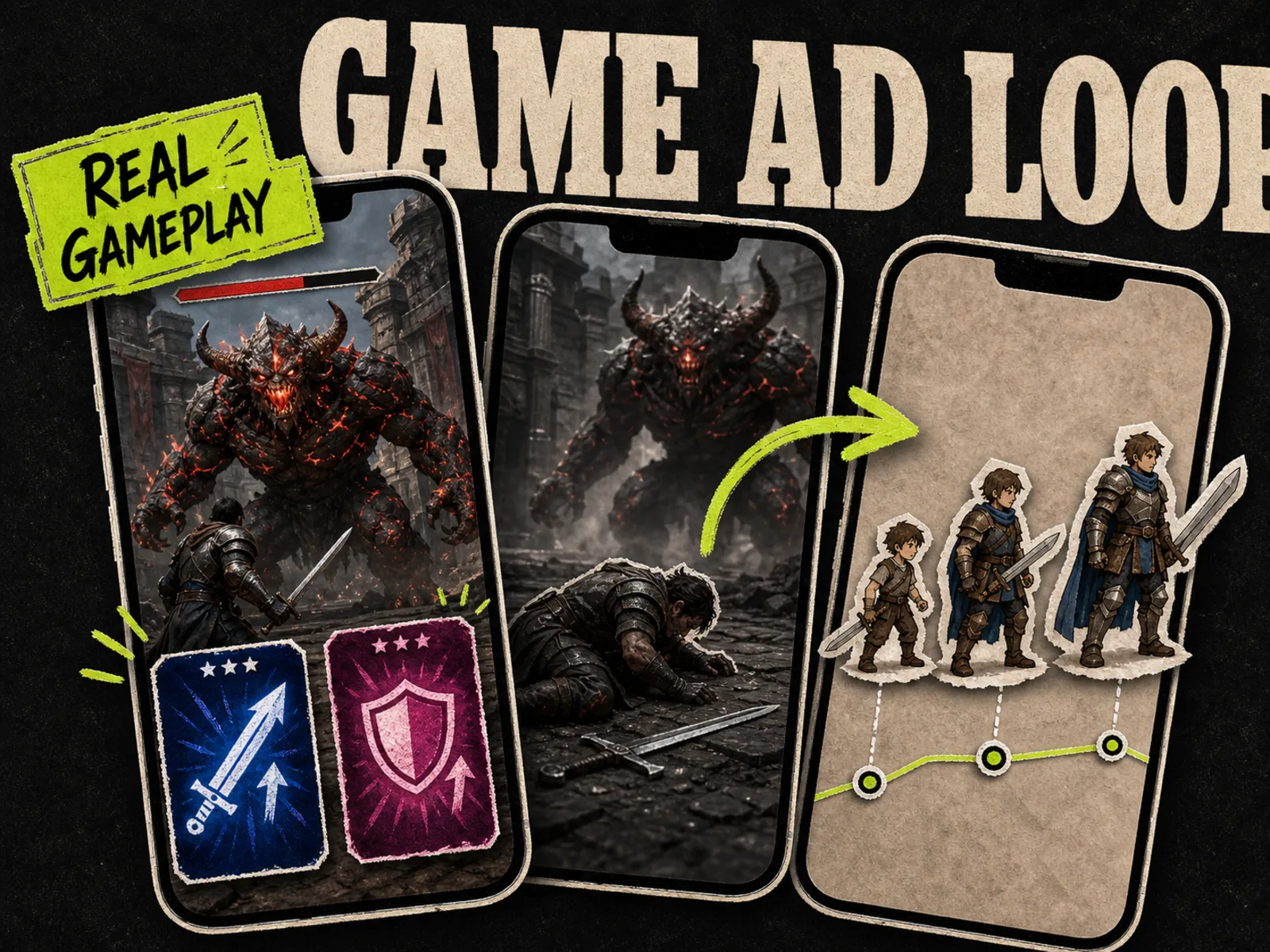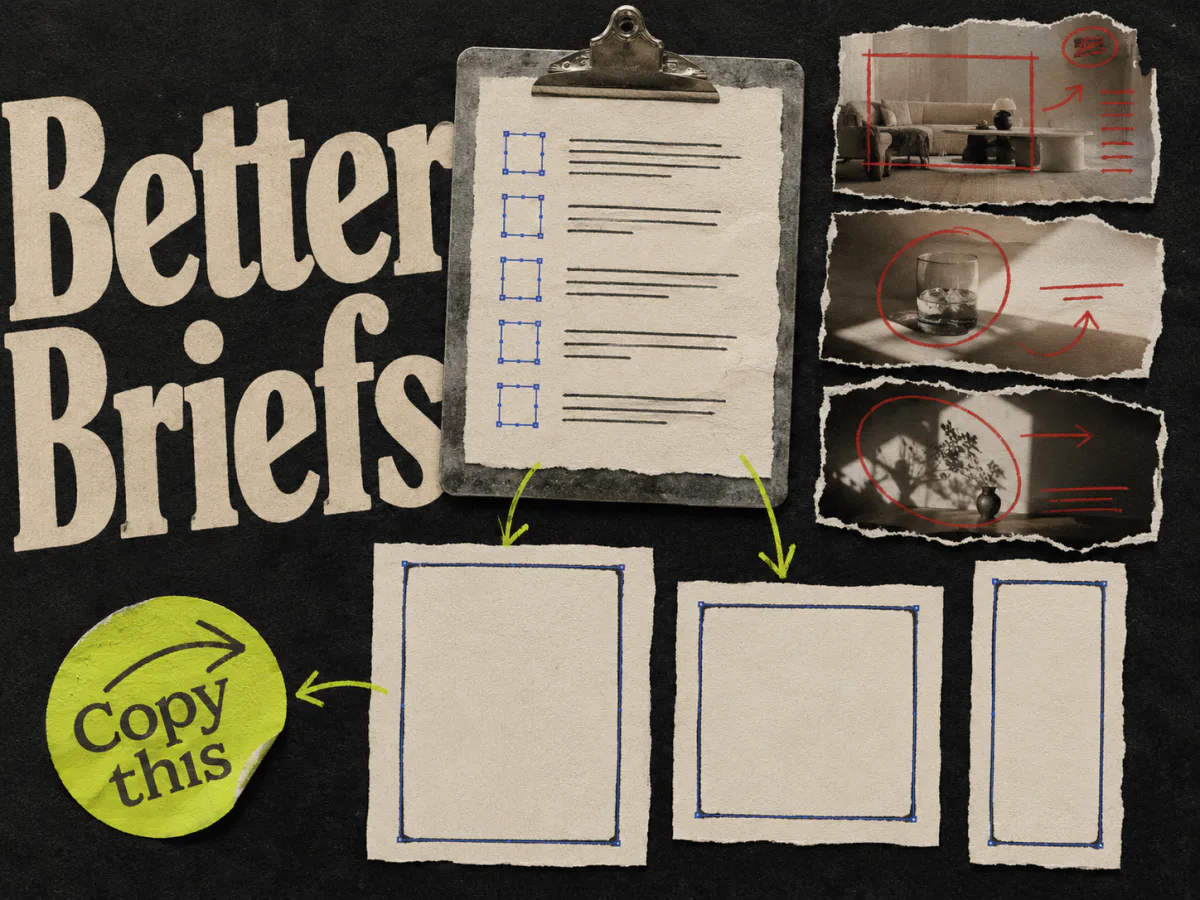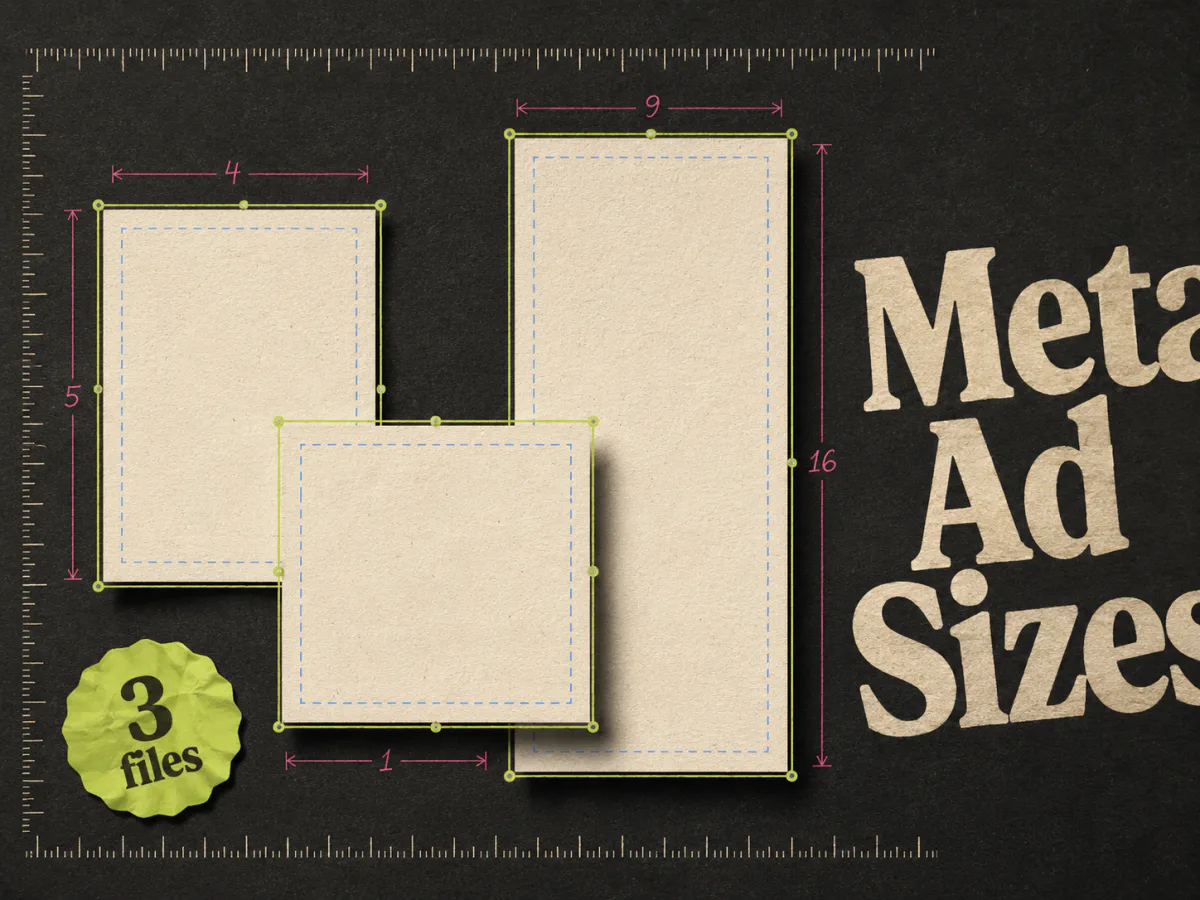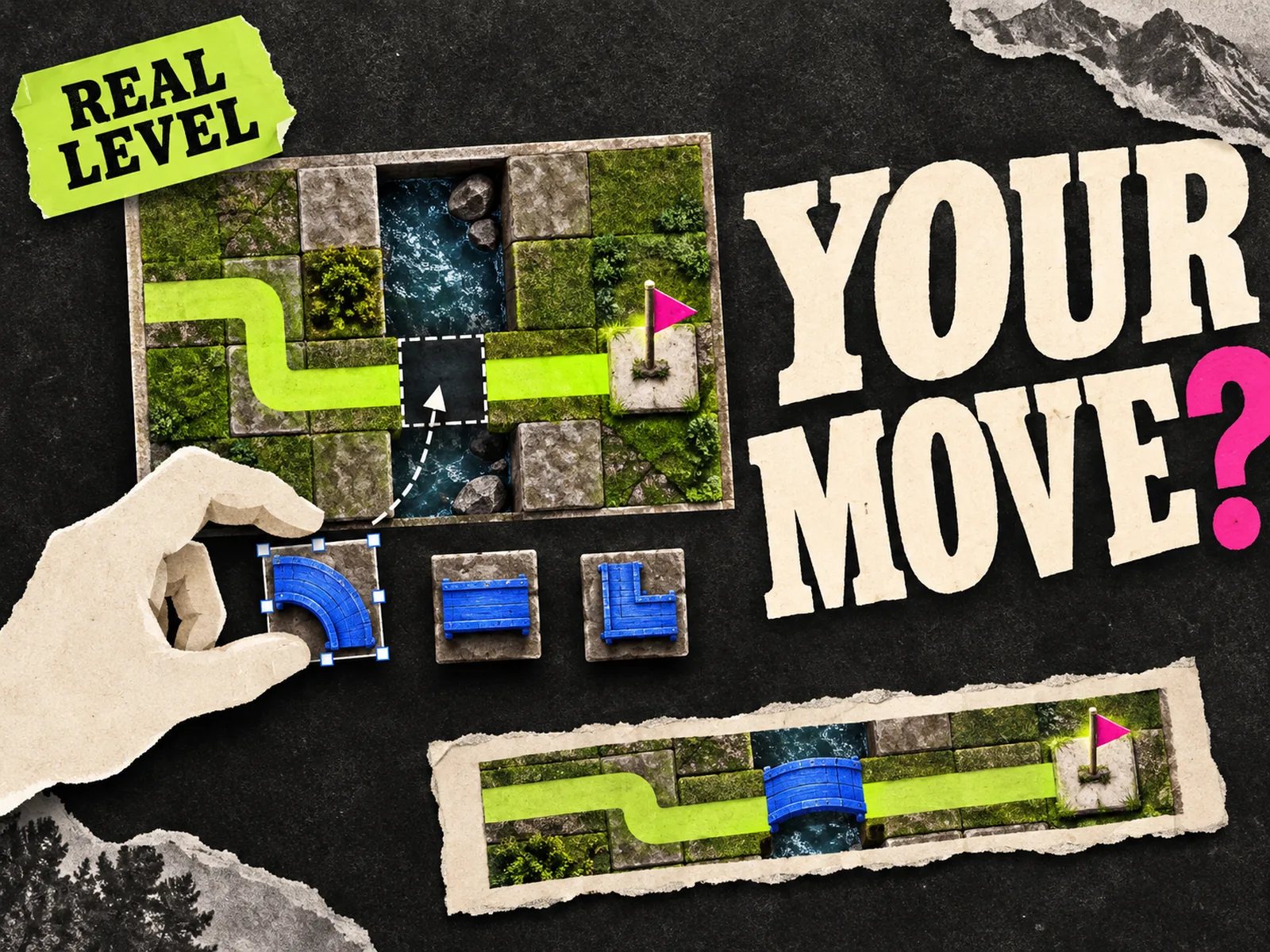
A puzzle game ad has one advantage: the viewer can start playing in their head before they install anything. Put a board on screen, make the obstacle legible, and give them a moment to imagine the move. AI can help frame that moment in several ways. The board still has to belong to your game.
This guide is for teams that already have a puzzle game and need more ad concepts from real levels. For the wider process of collecting gameplay, briefing AI, and adapting assets across platforms, see our mobile game creative workflow. Here we'll stay with the puzzle itself: which state to show, where to stop the reveal, and how to keep the advertised move honest.
Start with a level someone can read on a phone
Choose a level with a visible goal and one obstacle. A crowded late-game board may be exciting to an experienced player but indecipherable to someone seeing the game for the first time. A good source level has a small decision that changes the board in a way the viewer can understand.
Record a clean capture of the actual level. Save the state before the move, the move itself, and the result as separate clips or stills. Note any rules that are easy to miss: whether a tile can move diagonally, what counts as a match, and whether a timer or limited moves are involved. Give the creative team the level ID and the game build used for capture. If a designer later changes the board, you can still trace what the ad showed.
Picture a path puzzle with three movable bridge pieces and one gap between the character and the exit. The viewer can see the exit immediately. The missing connection is the problem. An invented danger, a giant red arrow, or a fake loss screen would only get in the way.
Four concepts from one real puzzle
These are different promises to a potential player, not four color treatments of the same screenshot. Use the same source level to sketch them, then decide which deserve production.
The open question
Freeze the board just before the decisive move. Ask a short question that the image can support: "Which bridge moves first?" Keep the options visible. This works as a static or the first frame of a video. The answer can appear later, but the opening should give the viewer time to try.
Check the question with someone who hasn't played the game. If they can't identify the goal without your explanation, simplify the crop or pick a different level.
The satisfying move
Show the actual move and its immediate consequence. In a sorting game, the pieces fall into place. In a path puzzle, the character reaches the exit. The clip doesn't need a manufactured chain reaction. The satisfaction should come from the mechanic players will meet after installing.
AI can draft alternative openings or suggest where to cut, but use captured gameplay for the board and outcome. If generated motion changes the rules or redraws the interface, the ad becomes a promise the game cannot keep.
The almost-right move
Show a plausible mistake, then let the viewer spot the correction. This is useful only if the wrong move is legal in the real game and its consequence is visible. A fake hand deliberately missing an enormous button may attract attention, but it tells the viewer little about the puzzle.
Try a board where two routes look viable. Stop before the wrong move resolves, or reveal the failure and the better route. The creative question is whether the correction pulls people in; it isn't proof that frustration improves installs.
The new rule
Some puzzle games change meaningfully when a new tile, tool, or constraint appears. Show the familiar action first, then introduce one new rule. For example, a bridge piece rotates after placement, changing the path the player thought they had built.
It's tempting to splice a later mechanic into an early level because the result looks more dramatic. Resist it. If the ad depicts a special event or advanced stage, say so in the brief and confirm that the same mechanic exists in the shipping game.
Give AI a job it can do well
Use AI to propose scripts, captions, crops, and storyboard order from a controlled source pack. The source pack should include the captured level, the legal moves, approved UI and character art, the app-store description, and a list of claims the team will not make. The ad creative brief template is a useful starting point for that packet.
Here's a prompt for the bridge example:
Using the attached capture of level 18, sketch three ad openings for a path puzzle. The goal is to connect the character to the exit using the three visible bridge pieces. Keep the board, rules, and outcome exactly as captured. Give each opening a different viewer question, a suggested crop, and the frame where the answer appears. Flag any line that implies a feature not visible in the capture. Do not draw replacement gameplay.
That prompt asks for editorial choices. It doesn't ask a model to invent a playable level. Review the proposals against the capture before making assets. If none of the openings makes the puzzle understandable, change the source level rather than trying louder captions.
Match the format to the moment
A static works when the question and the possible move fit in one image. Preserve enough board context to see the goal, but enlarge the decision area for a phone screen. A split screen can compare two possible moves if the viewer can still read both boards.
Video earns its place when the motion is the point: a tile slides, a route opens, or a chain of consequences unfolds. Give the viewer a beat before the answer. Cutting straight from the question to the solution removes the little bit of play that made the ad interesting. Our guide to static versus video ads can help when the same idea could go either way.
A playable is a separate production job. The viewer needs a working interaction, not a video that looks interactive. Meta describes playable ads as a way for people to try a game before installing. If the puzzle depends on the pleasure of making the move, a playable may be worth building. Keep its rules close to the installed game and test it on a phone before launch.
For Meta placements, check the final crop and UI at the sizes you intend to run. The Meta ad sizes guide covers the common compositions. A board that reads at desktop size can become a blur once a caption, safe zone, and app icon compete for space.
Test the idea, then the treatment
Write down the question before generating a batch. For the bridge level, the first test might be: does an unanswered board invite more qualified installs than a clip that immediately demonstrates the solution? Keep the level, offer, destination, and broad audience as comparable as your setup allows. Name each ad by concept and treatment so the result can inform the next brief.
Don't call a creative a winner because it received more clicks in a tiny or uneven test. Look at the account's actual delivery and downstream app events, then decide whether there is enough evidence to continue. If one concept earns another round, test a better crop or opening line inside that concept. The ad testing methods guide explains why a live creative comparison and a controlled A/B test answer different questions.
A useful review note is short: which level appeared, what the viewer was asked to do, where the answer appeared, what happened after the click, and what you'll change next. A folder named "winning puzzle ads" won't tell the next editor any of that.
Where Adrio fits
Adrio can help turn a captured puzzle state and approved game assets into static ad concepts, compare directions, and prepare Meta-ready variants. Give Spark the real board and the rule it must preserve. Review every proposed headline, crop, and result against gameplay before approving an asset or launch.
Adrio is one part of the production chain. Gameplay capture and a true interactive playable still need the game and the people who build it. Use the Meta creative workflow to keep the brief, asset, test, and next decision connected.
The best first batch is small: one readable level, two genuinely different concepts, and source files that let a reviewer verify every move. If the board itself is hard to understand, fix that before asking AI for twenty more ads.