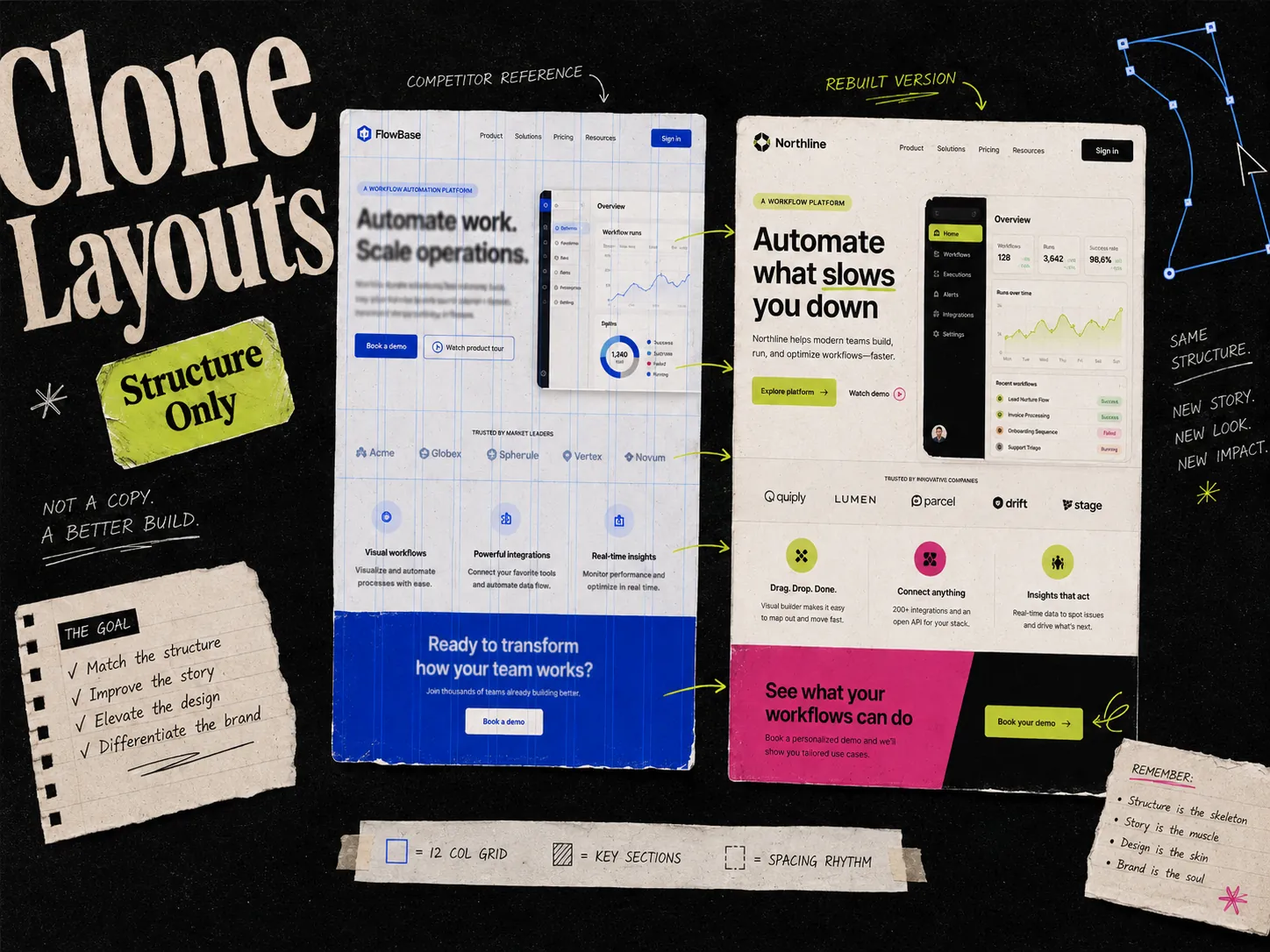
Cloning an ad means reusing its structure. Copying means lifting the actual assets. That one difference decides whether you are running smart competitive research or asking for trouble.
Cloning is taking the hook style, the layout, and the offer framing, then rebuilding all of it with your own brand, product, and images. Copying is downloading the competitor's photo, keeping their words, or swapping their logo for yours. The first is normal. The second can break copyright law and Meta's rules.
Quick note: this is a plain-language guide, not legal advice. If a lot of money or a real dispute is on the line, talk to a lawyer.
The short version
| Clone (fine) | Copy (risky) | |
|---|---|---|
| Hook style | Reuse the idea, write your own line | Paste their exact words |
| Layout | Follow the same structure | Trace their file pixel for pixel |
| Images | Use your own photos or references | Download and reuse their image |
| Logo and brand | Use yours | Keep theirs or edit it |
| Offer | Match the framing, use your real deal | Claim their offer as yours |
What cloning actually is
Ideas are not owned. The idea of "lead with a price comparison" or "put a five-star review under the headline" is used by thousands of brands. You can study what works in your market and build on it.
When you clone, you keep the parts that are common patterns:
- The type of hook (problem, price, proof, curiosity)
- The order things appear in
- The kind of proof used
- The offer framing
- The format and aspect ratio
Then you rebuild every piece with your own material. The result follows a proven shape but is yours.
What copying is
Copying is taking the competitor's actual work and passing it off as your own. That includes:
- Their photos or video clips
- Their exact headline and body copy
- Their logo, even with small edits
- Their model, mascot, or brand character
These are protected. Photos and written copy are covered by copyright the moment they are made. Logos and brand names are usually trademarks. Using them in your own ad can lead to a takedown, a disabled ad account, or a legal letter.
What Meta's rules say
Meta's Advertising Standards are clear on a few points that matter here:
- You cannot use someone else's intellectual property without permission. That covers logos, brand names, and copyrighted images.
- You cannot run ads that pretend to be another brand or mislead people about who is behind the ad.
- Meta responds to intellectual property complaints and can remove ads and restrict accounts.
So even if a competitor never finds out, Meta's own review can catch a lifted asset. Cloning the structure keeps you on the right side of all of this, because nothing in the final ad belongs to anyone else.
How to stay on the safe side
A simple checklist before you launch:
- Did you write the copy yourself? Good.
- Are all the images yours, licensed, or your own references turned into new art? Good.
- Is your logo the only brand mark in the ad? Good.
- Does the ad clearly come from your brand, with no chance of being mistaken for the competitor? Good.
If you can tick all four, you cloned. If any answer is no, you copied, and you should fix it before it goes live.
Where Adrio fits
Adrio is built around the clone side of this line, on purpose.
When you work from a competitor ad in Adrio, it pulls out the structure, not the assets. You bring your own product, your own images, or references found by Spark, our creative agent. Adrio then builds a new static ad from those inputs: separate agents read the reference, write fresh copy, and design the layout. The headline is new. The image is yours. The design is your own.
You get the benefit of a proven pattern without ever shipping someone else's work.
FAQ
Is it legal to recreate a competitor's ad? Recreating the structure with your own brand and assets is normal and widely done. Reusing their actual images, copy, or logo is not, and can break copyright or trademark law.
Will Meta reject an ad that copies a competitor? It can. Meta acts on intellectual property complaints and reviews ads for misuse of logos, brand names, and copyrighted content. Cloning the structure avoids this because nothing in the ad belongs to anyone else.
Can I use a competitor's product photo if I change it a little? No. Small edits to someone else's photo are still based on their copyrighted work. Use your own images or new art instead.
What is the safest way to learn from competitor ads? Study the structure, then rebuild it with your own material. Keep a clear record that the copy, images, and brand in your ad are yours.